
On a ground-mounted array, a cleaning crew can walk up to the row, work along it, and move on. On water, that simple routine falls apart. Modules sit on pontoon rafts joined by narrow walkways, the deck underfoot is wet and unsteady, and the space beside a float is usually open water rather than a roof surface. this guide explains why floating PV cleaning depends on remote operation, edge awareness, and wet-surface knowledge, and what a tracked remote-controlled machine such as the RHINOSTAR EC6 actually contributes in that setting.
Why Floating Solar Arrays Change the Cleaning Access Problem
Access is the first thing that changes. Floating arrays sit on ponds, reservoirs, quarry lakes, and canals, and their modules are mounted on pontoon structures linked by service walkways. Nobody parks a truck beside row 40. Tools and water get carried across a floating structure, one trip at a time, and the same trip repeats for every section being cleaned. Soiling keeps arriving too. Dust, pollen, bird droppings, and the fine film that settles on glass near open water make cleaning a routine part of operations rather than a one-off job. The U.S. Department of Energy tracks soft costs such as operations and maintenance as a meaningful share of solar plant economics, and labor-heavy cleaning on water is exactly where those costs accumulate. The second change is what happens once a person steps onto the array. A wet pontoon deck is slippery, and float seams, walkway ends, and outer perimeters all lead straight into water. Workers are balancing on a moving surface while carrying brush handles, hoses, and the weight of the water itself. Moving a heavy cleaning machine out there runs into the same problem in another form: cranes, barges, and extra hands. Transfer difficulty and water-contact risk, more than cleaning technique, decide which equipment makes practical sense on floating PV.
How Remote Control Reduces the Need for Staff to Step on Floating Panels
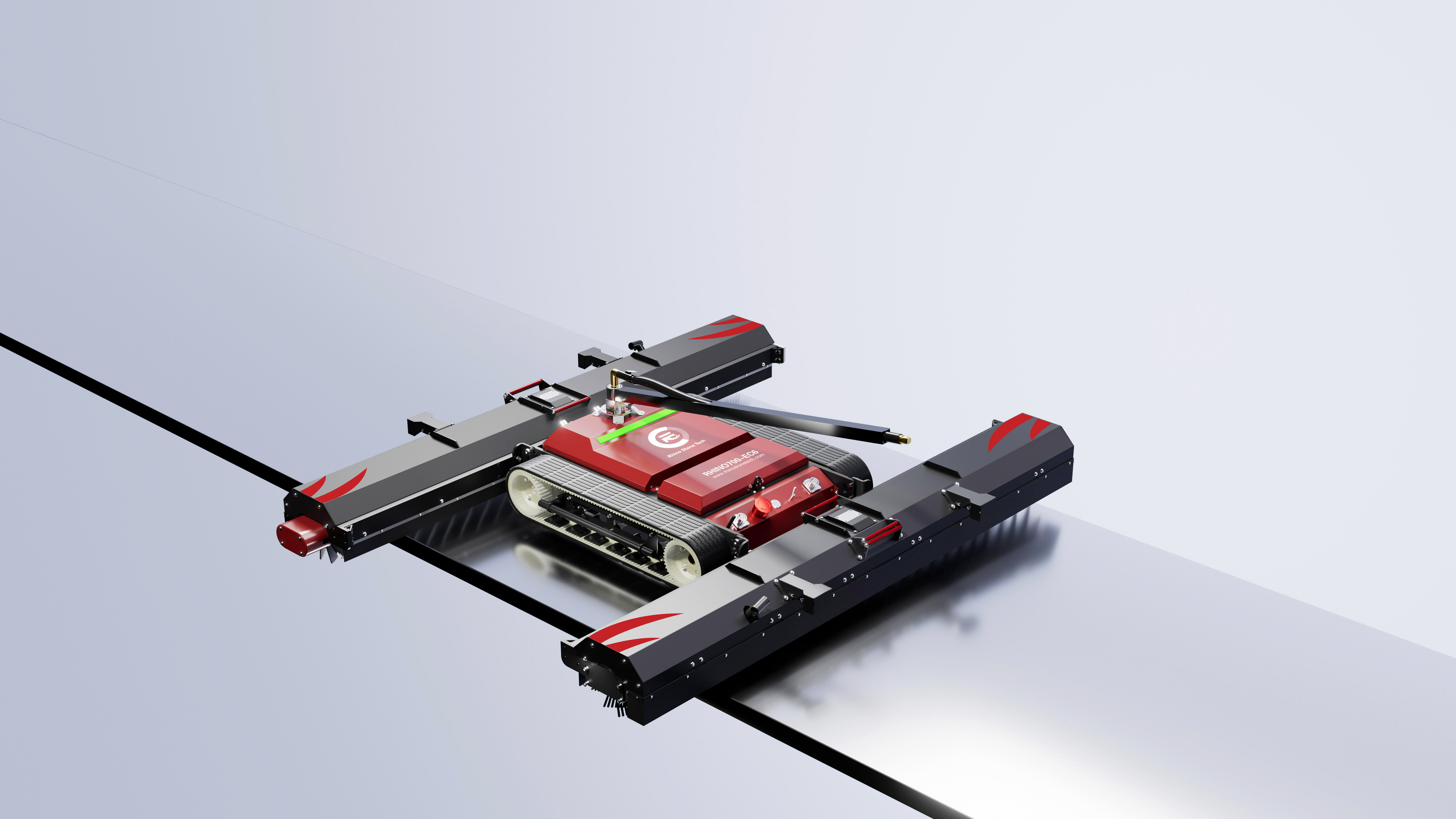
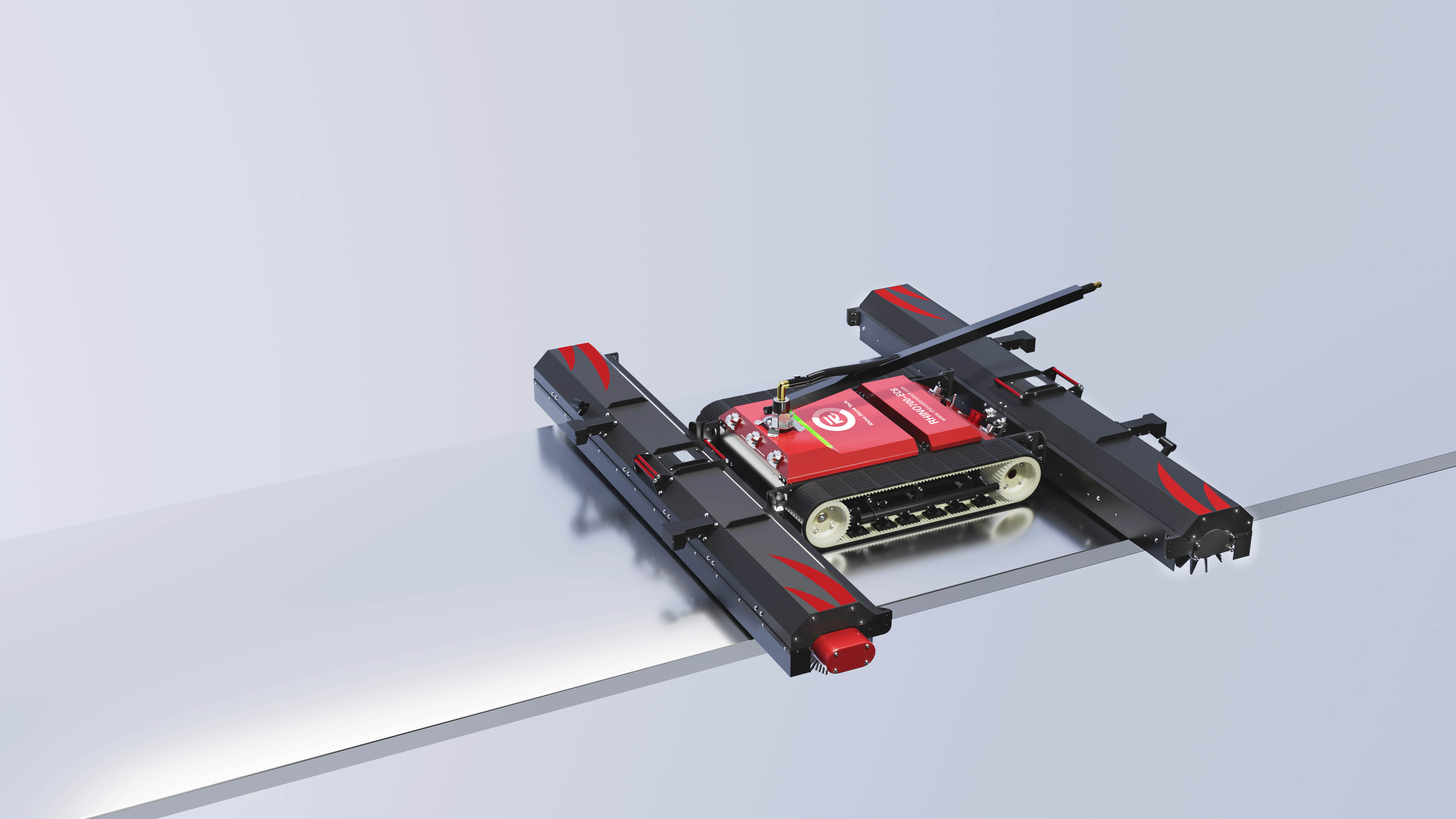
A remote-controlled crawler robot changes the plan. Instead of sending people out along the pontoons, the machine is placed on the array and driven from a stable position — the shore, a fixed service platform, or a boat deck that is not heaving with the floating structure. The operator watches the robot travel the rows and steps onto the floating structure mainly when the machine has to be repositioned into a new section. That single change removes most of the wet, unstable footing that makes floating PV cleaning risky in the first place.
1. A 200 Meter Control Range Supports Operation from Stable Positions
Short-range radio is the technology behind almost every industrial wireless remote control, and ETSI EN 300 220 describes the general requirements for short-range devices operating between 25 MHz and 1000 MHz — the kind of license-exempt link used for jobs like this. The RHINOSTAR EC6 uses a 200 m wireless remote, which is enough distance for an operator to stay on the bank or a fixed walkway while the robot works several rows away. Usable range depends on the layout. Open water and a clear line of sight help; steel gangways, container walls, and stacked equipment can weaken the signal. Operators normally plan the route so the robot stays visible, the radio path stays clear, and the machine never works so far away that a walk over would take too long.
2. Wet and Moving Surfaces Change How Operators Judge Robot Stability
Rubber tracks that grip well on a dry rooftop behave differently on wet glass and wet float surfaces, so the person holding the controller has to read the surface, not just the machine. Humidity, spray from a cleaning pass, and rain all reduce the friction available where track meets glass. That is why operators slow down on wet passes, avoid sharp turns, and take slopes at a steady angle rather than rushing them. A machine rated for 33° slopes and 60 cm obstacle crossing still needs those numbers used sensibly: a wet 33° panel is a harder job than a dry one, and a 60 cm gap is still a gap. Floating arrays add movement on top of that. Pontoons rise and fall with wind, waves, and passing boats, so the surface is never perfectly still, and the operator has to judge how the robot behaves on something that shifts underneath it.
Where Edge Awareness and Operator Training Still Matter on Water
On a rooftop, an edge usually means a fall onto a roof surface. On a floating array, the edge usually means open water, often in the gap between two pontoon sections. The consequences of a mistake are different. A robot that drops off a float is hard to retrieve and can be damaged or lost, and the operator standing near those gaps is not on forgiving ground either. This is where anti-fall sensing earns its place. The RHINOSTAR EC6 carries four anti-fall sensors that watch for drop-offs at array boundaries, and on floating PV those boundaries are irregular: float seams, walkway ends, gaps between rafts, and the outer perimeter all present different edges instead of one clean line. Sensors do not replace judgment. A floating site changes week to week. Water level rises, a raft shifts after a storm, a mooring line or power cable crosses a path that was clear last month. Someone has to walk the array, note the risky spots, and brief the operator before cleaning starts. Training for this work is largely about positioning: where the operator stands, how far the robot travels from the nearest safe footing, and when to stop and reset. A 24V 30Ah battery that runs for at least four hours, with a four-hour charge window, also shapes the day, because cleaning blocks get planned around safe access points rather than run until the machine quits. Water conditions and platform layout always need a site-specific assessment by the operating team.
Conclusion
Floating PV cleaning is less about scrubbing technique than about who stands where. Remote control keeps operators off wet pontoons for most of the work, a 200 m radio link gives them room to stay on solid ground, and anti-fall sensing covers the irregular edges that water sites create. The machine still needs a person to set it up, drive it, and watch the water. A datasheet from any solar panel cleaning robot manufacturer will list range, slope, and sensor counts; what decides whether the equipment suits a floating array is whether those figures match the access, surface, and edge conditions already on site.
FAQ
Q: Why do floating solar farms use remote-controlled cleaning robots?
A: The main reason is access. Crews cannot easily reach modules on pontoon arrays, and stepping onto wet floats while carrying brushes and hoses is genuinely risky, so work slows down and safety margins shrink. A remote-controlled crawler lets one operator place the machine on the array and drive it while standing on shore, a fixed platform, or a stable boat deck. That cuts the amount of time people spend on unstable floating surfaces and reduces the labor that drives up operations and maintenance costs on water sites.
Q: How far can an operator stand from a remote-controlled solar cleaning robot?
A: It depends on the radio link and the site layout. The RHINOSTAR EC6 supports a 200 m wireless remote control, which puts an operator on the bank or a fixed walkway while the robot works several rows away. Short-range radio performs best with a clear line of sight, so steel gangways, containers, and stacked equipment can shorten the practical distance. Most operators work closer than the maximum so they can reach the machine quickly when it needs repositioning or attention.
Q: Do anti-fall sensors matter on floating solar arrays?
A: Yes, because the edges on water are less predictable than on a rooftop. Instead of one clean array boundary, a floating site has float seams, walkway ends, gaps between rafts, and an outer perimeter. The RHINOSTAR EC6 uses four anti-fall sensors to watch for those drop-offs. They add a useful layer of protection, but they work alongside an attentive operator who knows the layout, keeps the robot visible, and stops the job when water or wind conditions change.
Sources / References
ETSI EN 300 220: Short Range Devices operating in the frequency range 25 MHz to 1000 MHz
Soft Costs | Department of Energy
Related Examples
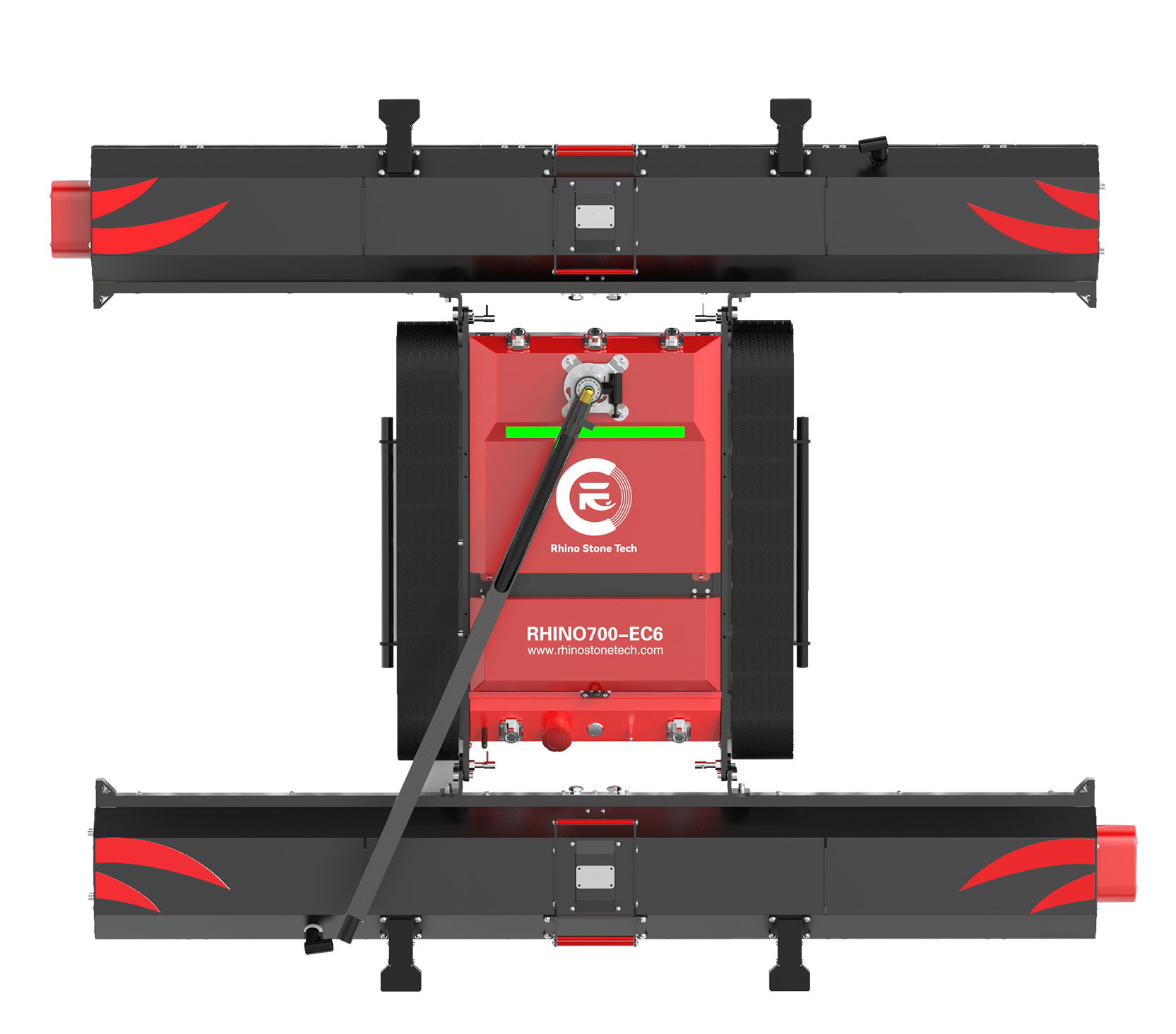
RHINOSTAR·EC6 Remote-Controlled Crawler-Type Solar Panel Cleaning Robot